
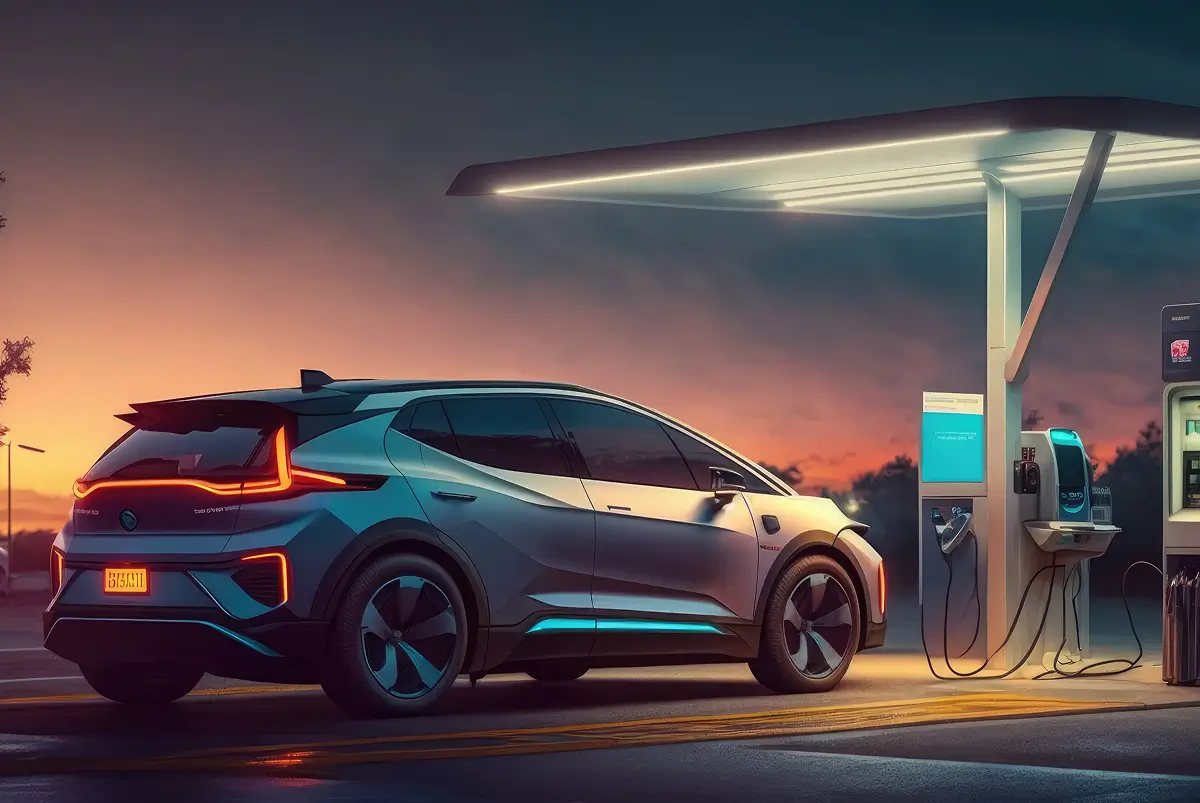
India’s electric vehicle (EV) revolution is accelerating faster than expected, reflecting a fundamental shift in mobility preferences, energy strategy, and industrial investment. With government support, growing consumer trust, and steep technology cost reduction, EV adoption is poised to reshape India’s mobility ecosystem by 2030.
1. EV Market Growth & Consumer Adoption
India’s EV industry is projected to reach USD 113.99 billion by 2029 with a CAGR of ~66% driven by cost reductions, performance improvements, and rising fuel price sensitivity (via IMARC & ICRA EV Forecasts).
Two-wheelers dominate, led by Ola Electric, Ather Energy, TVS iQube, and Bajaj Chetak, while passenger EV demand is spearheaded by Tata Motors (Nexon EV, Tiago EV, Punch EV) and MG Motor (ZS EV). Fleet adoption is accelerating through BluSmart, Uber EV initiatives, Lithium Urban, and delivery electrification by Zomato, Swiggy, Flipkart.
2. Charging Infrastructure Expansion
India currently has 12,000+ public charging stations, expected to cross 100,000 by 2027 (via Bureau of Energy Efficiency).
Key players such as Tata Power EZ Charge, Statiq, ChargeZone, E-Fill Electric, Ather Grid, and PSU initiatives from IOCL, BPCL, HPCL are rapidly expanding AC fast-charging and DC supercharging networks.
Highway charging corridors are being rolled out across Golden Quadrilateral, Yamuna Expressway, Mumbai–Pune Expressway, and Bengaluru–Chennai route.
3. Battery Innovation & Manufacturing Push
India is making significant strides in lithium–ion manufacturing under PLI-ACC Battery Scheme.
Companies like Exide–Leclanché, Amara Raja, Reliance New Energy, Log9 Materials, Ola Gigafactory and Tata’s Gigafactory plans are catalyzing domestic battery production, recycling, and energy storage innovation.
Solid-state battery R&D and battery swapping models (led by Sun Mobility & Battery Smart) are gaining traction for 2W/3W fleets.
4. Policy Momentum & Government Vision
EV growth is strongly backed by:
- FAME II subsidies (extended to March 2024)
- State incentives across Maharashtra, Delhi, Gujarat, Karnataka, Telangana
- GST slashed to 5% on EVs & chargers
By 2030, the government targets:
- 80% two-wheelers
- 70% commercial fleets
- 30% private cars electric (via NITI Aayog EV Vision)
5. Green Mobility & Renewable Integration
India aims to link EV charging with renewable energy. Solar-charging hubs by Tata Power, ReNew Power, and DISCOM programs in Delhi & Maharashtra are enabling clean EV charging grids.
Battery recycling by Attero, Lohum Cleantech, Gravita is building circular economy capabilities to reduce import dependence.
The Road to IIMS 2026
The EV shift is reshaping India’s automotive future — from vehicles and batteries to charging, finance, and software ecosystems. At IIMS 2026, expect to witness India’s EV leadership live — with breakthrough technologies, battery innovation, charging systems, sustainability initiatives, and electric mobility pioneers.
References:
NITI Aayog EV Vision, BEE Charging Infra Report 2023, ICRA EV Outlook, IMARC EV Market Research, SIAM, Ministry of Heavy Industries — FAME-II Policy Documents, CEEW Energy Studies, McKinsey India EV Insights